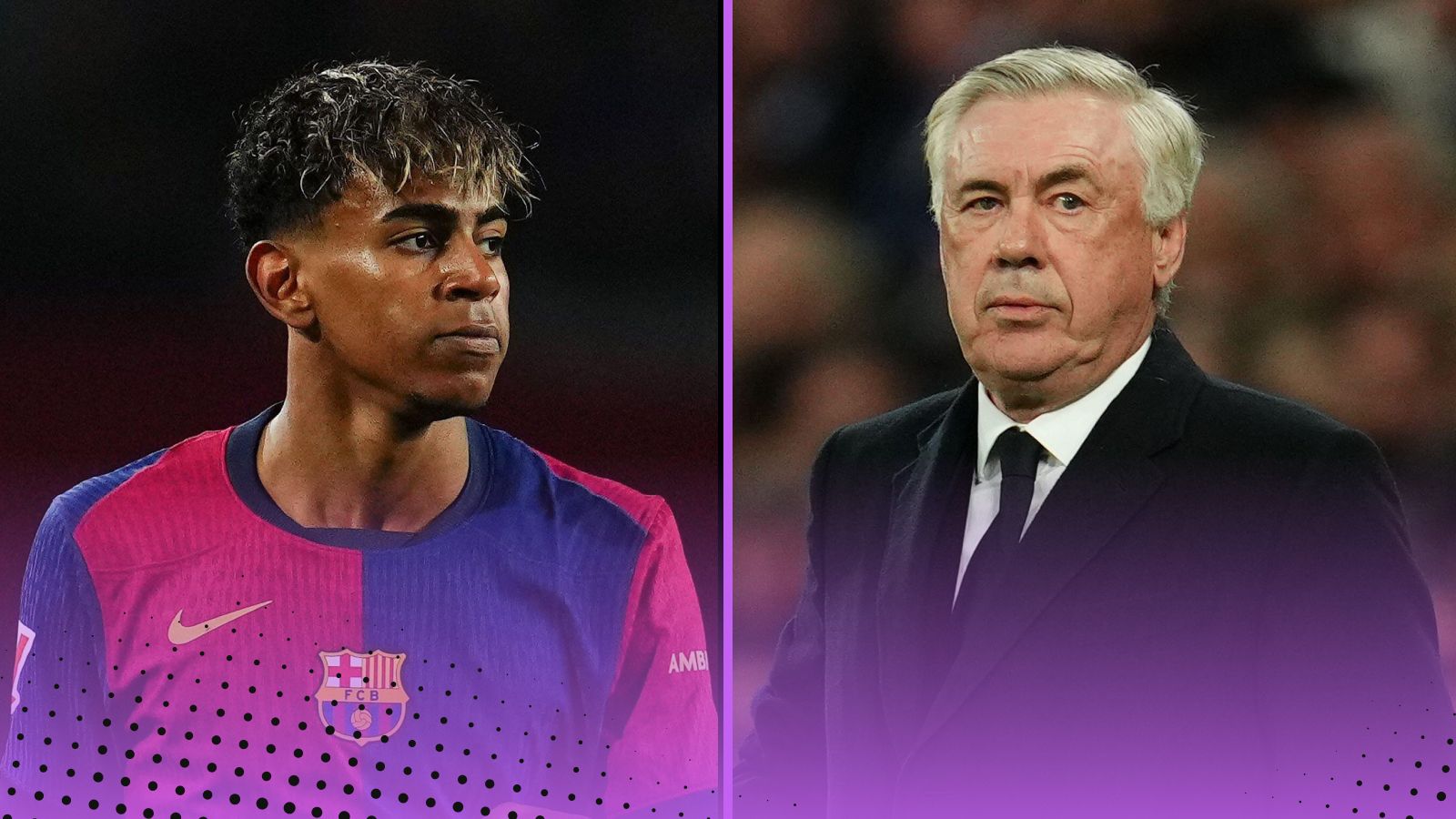
The Ancelotti-Yamal Problem: Why the CMO You’re Looking For Doesn’t Exist
Carlo Ancelotti has won the Champions League five times.
As a manager.
He last played professionally in 1992.
Lamine Yamal is extraordinary. At 17, he was already one of the best players on the planet. He reads space, beats defenders, and wins games that looked unwinnable.
But you would not ask him to set the formation. Manage the dressing room. Decide the tactical shape for a Champions League final. Negotiate with the board.
Different skills. Different experience. Different stage of a career.
Now read most CMO job descriptions.
What Founders Are Actually Asking For
“We need someone who can own the commercial strategy, build our brand, and drive pipeline growth.”
So far, reasonable.
“They will need to manage our PPC campaigns, set up our HubSpot, run our social media, and ideally have some design experience.”
There it is.
Founders are writing job descriptions that want Ancelotti’s brain and Yamal’s legs. Board-level commercial thinking and campaign-level technical execution. Strategic vision and hands-on delivery. In one person. For one salary.
That person does not exist.
And if you think you have found them, you have hired a very expensive Lamine Yamal who has started calling himself Ancelotti.
Why the Confusion Happens
It is not stupidity. It is stage.
Most founders run marketing themselves in the early days. Scrappy, hands-on, close to every campaign and every channel. When they finally decide to bring in a senior hire, they picture someone who does what they do, but better, and also thinks strategically at board level.
The problem is that those two things pull in opposite directions as careers develop.
A marketer who spends a decade running PPC accounts gets extraordinarily good at running PPC accounts. Deep channel expertise. Tactical precision. Fast execution within platforms.
A marketer who spends a decade owning P&Ls, running international teams, and reporting to boards gets extraordinarily good at something else entirely. Diagnosing what is broken in a commercial engine. Building the infrastructure that makes channels worth running. Making the call on where investment goes and why. Connecting marketing activity to revenue outcomes in language that a CFO or PE partner understands.
By the time someone has the commercial seniority to be a genuine CMO, they have not personally set up a Google Ads campaign in years. Not because they got lazy. Because that stopped being their job a long time ago.
The consequences of mixing these two profiles up show up consistently in one place: the ABM programme that is running perfectly and generating nothing. Campaigns active, sequences built, channels firing. No pipeline. The reason is almost always a strategy problem, not an execution one.
This is not a bug. It is exactly how seniority works in every serious profession.
Ancelotti does not train by running drills with the squad every morning. He watches. He thinks. He decides who plays, in what shape, against which opponent, and when to change it.
That is the job.
What Happens When You Hire the Wrong Profile
The mistake is expensive in ways founders do not always see immediately.
The first sign is usually around six months in. The new CMO is running campaigns. Managing the website. Responding to agency briefs. Visibly busy.
But the commercial strategy is still unclear. The channel mix has not been properly diagnosed. No one has built the framework that defines what good looks like, where the budget should actually sit, or how marketing connects to revenue in a way the board can track.
Months pass. Activity continues. Results plateau. The founder starts to wonder if they hired the wrong person.
They did. But not for the reason they think.
This pattern is not limited to founder-led businesses. It is one of the most consistent things I find when I step into PE-backed portfolio companies. High activity. Visible busyness. And a commercial engine that still is not producing what the board expected. The diagnosis is almost always the same.
They hired an executor who looked like a strategist. Or they hired a genuine strategist and then pulled them down into execution until they became unrecognisable. Either way, the architecture never got built.
The other version is equally common.
A founder hires a genuinely senior operator. Impressive track record. Real commercial depth. Board-level experience with numbers to back it.
Then the founder asks them to pull a PPC report. Manage the agency on campaign setup. Fix the email sequences in the CRM.
The senior operator either does it badly, because those skills have not been the point for years, or they do it resentfully, because they were hired for strategic leadership and are being used as a marketing coordinator.
Neither ends well.
CMO tenure is short across the market. In founder-led businesses and scale-ups, it tends to be shorter still. The mismatch between what gets hired and what is actually needed is one of the most consistent reasons why.
What You Actually Need
The question is not “can we find someone who does both?”
The question is “what does the CMO job actually require at our stage?”
If your business needs someone to run campaigns, manage channels, and deliver marketing execution, that is a head of marketing, a growth marketer, or a channel specialist. A valid hire. A necessary hire at the right moment. Just not a CMO.
If your business needs someone to diagnose what is broken in your commercial engine, build the strategy and infrastructure, define where investment should go, manage the people and resources that execute against it, and hold accountability for revenue outcomes, that is a CMO.
The CMO decides what execution resources sit underneath the strategy. An internal team. External agencies. Channel specialists. A combination of all three. Their job is to know which configuration is right for the stage, build it, and drive commercial results from it.
Ancelotti does not play the ball. He decides who does, in what system, against this specific opponent, in this specific moment.
That is senior commercial leadership.
The Fractional Question
For many businesses at growth stage, the honest answer is that they do not need a full-time CMO yet.
They need the diagnosis, the architecture, and the commercial accountability. Then they need execution resources to deliver against it.
A fractional CMO, used correctly, covers the first part. Senior. Experienced at operating under pressure. Focused on strategy and commercial outcomes rather than campaign management.
Execution sits elsewhere, managed against a clear framework the CMO builds and owns.
This is not a compromise. For the right stage, it is the correct structure.
If you are trying to work out whether a fractional model is right for your stage, and what it should actually cover, this piece breaks down exactly what the role should own and what it should not.
Where founders get this wrong too is expecting the same thing from a fractional that they expected from the phantom full-stack hire. They bring in a fractional CMO and ask them to run PPC two days a week.
That is not a fractional CMO. That is a very expensive part-time marketing manager.
The Question to Ask Before You Write the Job Description
What is the actual commercial problem you are trying to solve?
If the answer is “we need more campaigns running and channels managed,” hire an executor. You will find one. They exist, they are good at what they do, and the role is well defined.
If the answer is “we do not know why our marketing is not working, we do not know where to invest, and we need someone to build the commercial engine and own the results,” hire a CMO.
Those are different problems. They require different people.
The best coaches in the world cannot sprint the length of the pitch anymore. The best young talents cannot yet read the game at the level that wins trophies over a career.
Both are valuable. Neither replaces the other.
Know which one you need before you hire.
The cost of getting this wrong is not just a bad hire. It is six to twelve months of the wrong strategy, executed well, by someone who was never set up to solve the actual problem in the first place.
Nick Bottai is a fractional CMO and commercial operator working with PE-backed businesses, scale-ups, and high-growth platforms. If you are trying to work out what commercial leadership your business actually needs at this stage, connect on LinkedIn or get in touch.